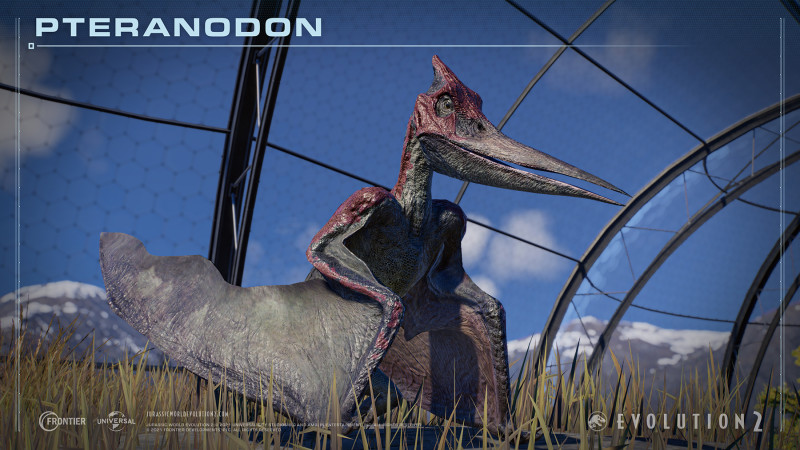
The enhanced enclosure design extends to the aviary, which can hold numerous flying critters, including the
Pteranodon, which I got to see emerge from a Lab. Three of them fly out together, each animated in different ways to give off the impression of a flock. Their habitat is barren at first, but Woods dives into the editing tools to quickly add trees, water, and rocks to it. The size of the aviary is also determined by the player. More glass domes can be added freely – much like the fencing – to make the enclosure grow dynamically. If the Pteranodons grow agitated, they can smash through the glass and fly around the park, potentially going after guests. The player will then need to track them down and tranquilize them to get them back where they belong. I asked if the ground dinosaurs could interact with the flying reptiles, and neither Woods or Newbold wanted to talk about it just yet, saying that answer will come closer to the late 2021 launch of the game.
I didn't see any dinosaurs fight in my demo, but I'm told the smaller variety will team up to take on larger beasts. Yes, that means raptors hunt in a pack! "Predators, when taking after their prey, will chase after them dynamically," adds Newbold. "There's no stopping and starting. There's improvements to the fighting system as well."
If a dinosaur is injured, it may need to visit the Paleo-Medical Facility, the one new structure I see among the familiar Ranger Station, Research Center, Park Tour, and more buildings from the first game. This medical facility is white, and has a large fenced-in area behind it where dinosaurs can be treated. You'll need to fly them in via helicopter. If a dinosaur cannot be treated in the field, you'll need to bring it here. The example I'm told is if one is seriously injured in battle. The Paleo-Medical Facility also comes with a unique vehicle called the Mobile Vet Unit, which you can freely control (just like all of the other vehicles in the game).
Monitoring dinosaurs' health will be much easier through the implementation of the new ranger post, which looks to be a small shack that you can place anywhere in an enclosure. The rangers use this station to perform welfare checks. The dino vitals are not as clearly defined in this sequel. Woods says there's a bit of a "fog of war" to that information, and the player will need to keep tabs on it. The best way to do that is through the ranger post.
Significant enhancements are also being applied to guests, their behaviors, and the structures you can build for them. Each guest's mood is divided into four categories: adventure, standard, nature, and luxury. They will gravitate to areas that they seek the most. For instance, an adventure junky will want to see carnivores.
The player can tailor attractions and amenities to these specific groups. These two structures are fully customizable, right down to what they offer and how they look. With the click of a button, the base attraction can transform into an aquarium, bowling alley, cinema, arcade, spa, and you name it. The design of that building is also fully customizable. The facade, roof decoration, entrance, entrance location, signage, and immediate surrounding ground can be changed with a number of preset options. For the ground, you can have trees, dinosaur skeletons, flags, and more. The color of all of the items can also be altered. If you want your shop to be hot pink, so be it. If you want each piece to be a different color, you can do that, too. The range of color is extensive, allowing for specific shades to be picked from a wheel.
During my demo, Woods and Newbold were positioned in the lower left, covering up most of the display where the park rating was in the first game. I didn't get to see what was there, but when Woods moved his arm, I saw a series of arrows. I asked if the player could speed up time, and Newbold responded: "There are some time controls. We allow the player to pause time and also speed up time." If a problem arises in the park, those time controls may be disabled until that issue is taken care of.
One of the new threats to the northern region is a snowstorm, which covers the ground in snow and can create problems all across the the park, such as losing power.
Woods and Newbold walked me through a number of the game's new features, but wouldn't talk about others that were teased in the trailer. We know marine dinos are in this sequel, but I didn't get to see them. The
Mosasaurus lagoon will have to be huge, but what else can we add to it, and how customizable will it be? What other water dinosaurs are in the game? Can they leap up and eat land dinosaurs? We really need to know the answer to that last question...
Details about game modes are also light at this time. I did however learn that the contract missions from the first game aren't in the story campaign, but will be present in Challenge mode.
Jurassic World Evolution 2 is coming to PlayStation 5, PlayStation 4, Xbox Series X/S, Xbox One, and PC. Frontier says they have nothing to say at this time about a Switch version. Details are also scarce for the new generation versions, but I'm told they will be enhanced.
I walked away from my demo impressed by the changes that Frontier is implementing. It looks to be a much deeper experience than before that gives the player a variety of new toys to use with less hassle. I can't wait to see that darn
Mosasaurus, and how the story will be handled. Here's hoping they give us looks at these aspects of the game soon!
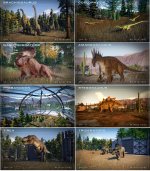
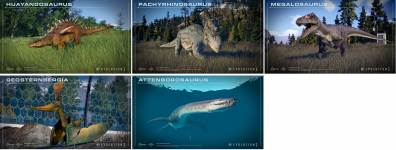
The Dinosaurs I Saw:
Acrocanthosaurus
Allosaurus
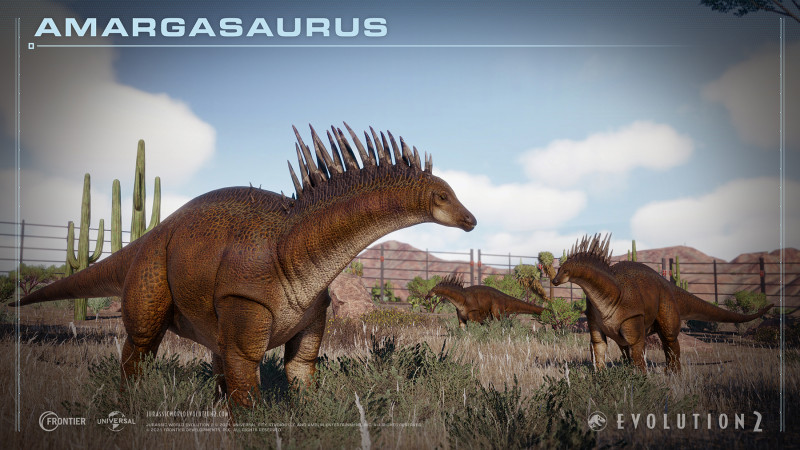
Amargasaurs
Ankylosaurus
Baryonyx
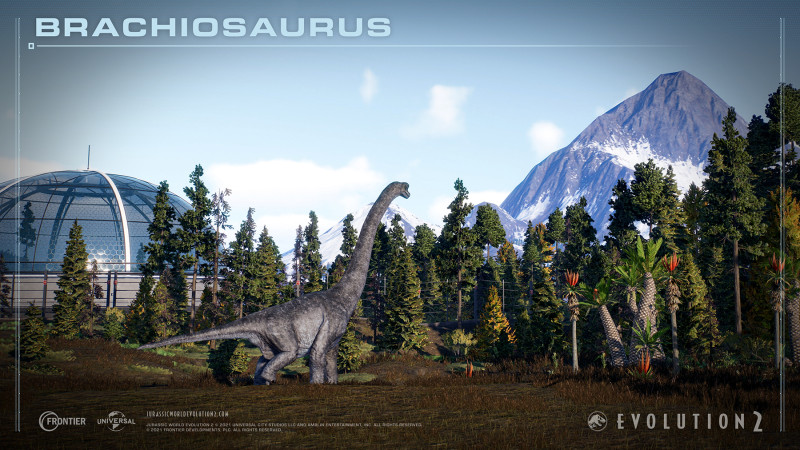
Brachiosaurus
Camarasaurus
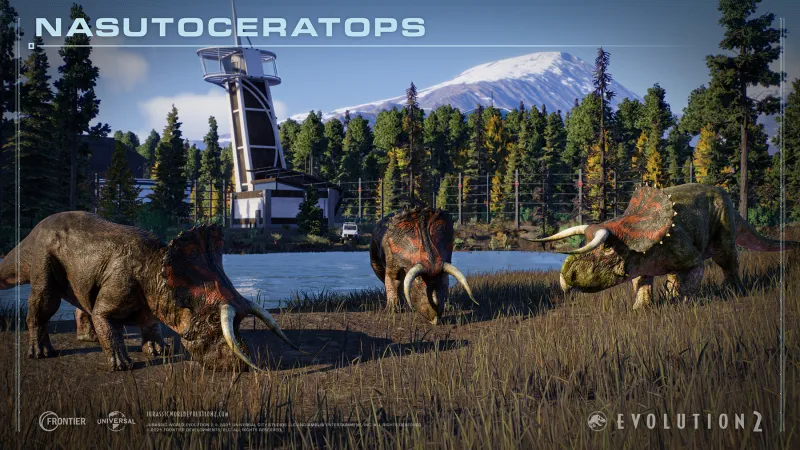
Nasutoceratops
Pteranaodon
Stegosaurus
Triceratops
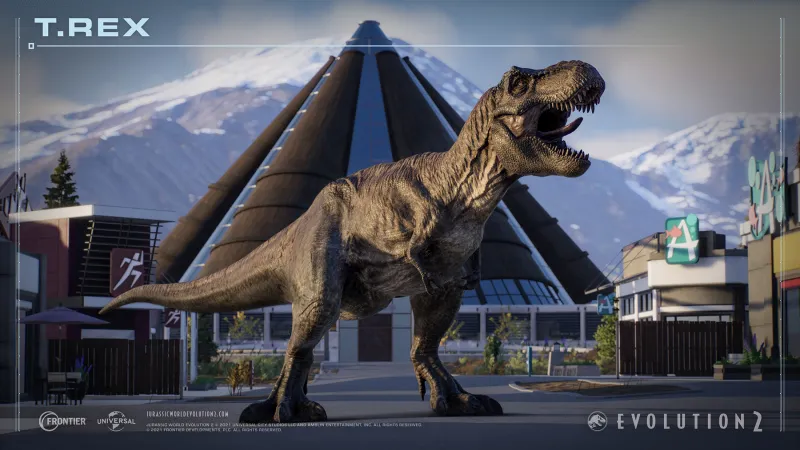
Tyrannosaurus Rex






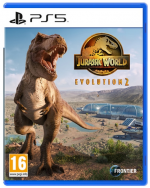
 ist wie schon der Vorgänger wieder ein ganz heißer GotY-Kandidat für mich, alleine schon wegen den ganzen coolen Neuerungen gegenüber dem Vorgänger samt DLCs